• Global Home Upgrades That Can Backfire | fyp

    When considering home upgrades, it's easy to assume bigger changes mean bigger returns—but that's not always the case in our Cheshire, Connecticut market. Over the years, I’ve seen how removing or converting a bedroom can significantly narrow a home's appeal. Most buyers still value bedroom count over features like oversized closets, home gyms, or expanded primary suites. In fact, I recently heard about a property that sold for nearly $15,000 less than it was purchased for after a third bedroom was turned into additional suite space and a walk-in closet.

    Converting a garage into living space is another upgrade that often backfires. Even with a polished finish, it can cost you a practical feature that many buyers want and expect. And, while investing in a $75,000 kitchen renovation sounds impressive, buyers typically compare your home to others in the neighborhood—meaning you might not see a dollar-for-dollar return.

    Unpermitted DIY projects or highly personalized changes that are tough to reverse can also hurt your bottom line when it’s time to sell. If resale value is important to you, it pays to focus on upgrades that have broad appeal rather than tailoring your home too much to individual taste. My goal is to help clients make choices that work for their lives today, and keep future options open.
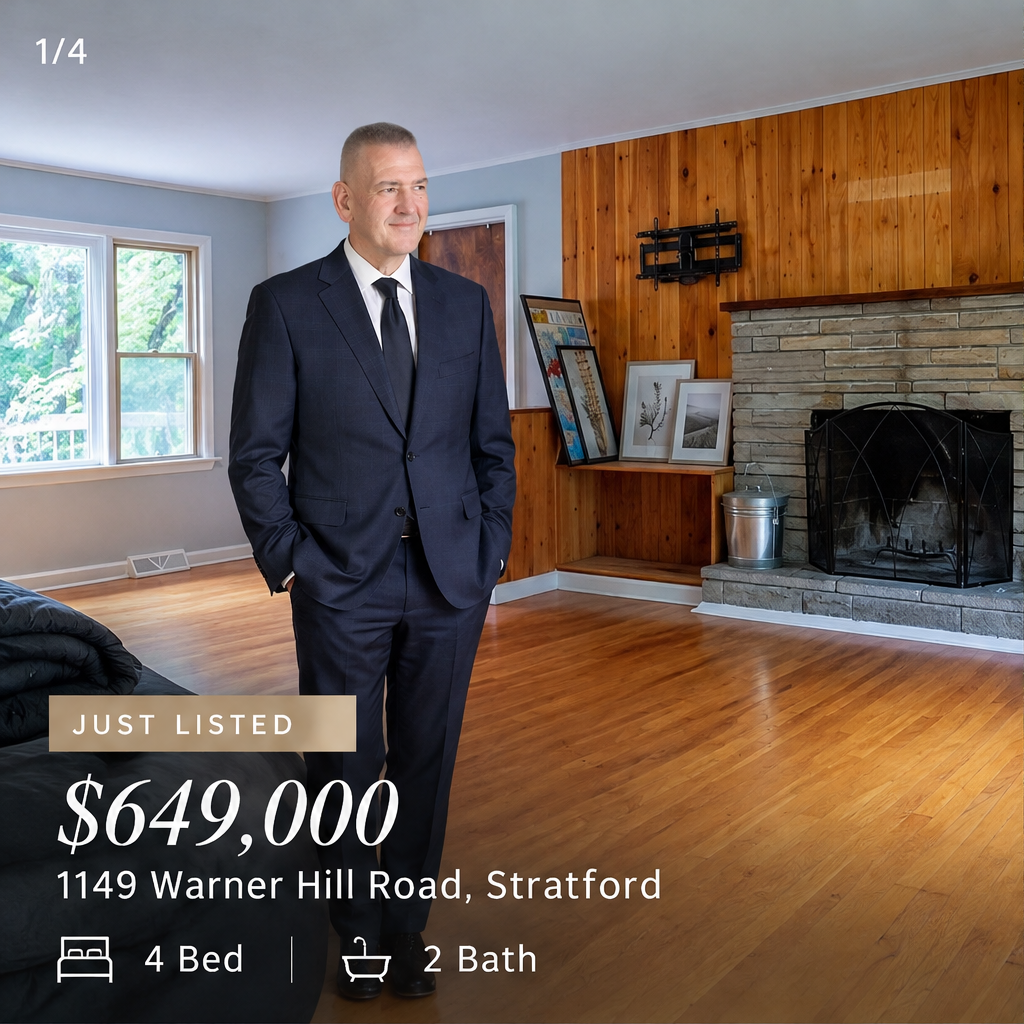

  • Stratford Space to Call Home

    Stratford Space to Call Home

    Welcome to 1149 Warner Hill Road in Stratford, a house offering four bedrooms and two bathrooms at a list price of $649,000. With a versatile layout and room for everyday living, this property is ready to welcome its next owners.

    The four-bedroom design provides flexibility for a variety of lifestyles. Create a dedicated home office, guest room, hobby space, or comfortable retreat for family members. Two full bathrooms add convenience to busy routines and relaxed weekends alike.

    Whether you are searching for more space or looking to make a fresh start in Stratford, this listing deserves a closer look. Its combination of size, functionality, and opportunity makes it an appealing option for buyers ready to take the next step.

    Interested in seeing it in person? Contact me today to schedule a private tour of 1149 Warner Hill Road and explore everything this home could offer.

    Continue to full article

  • Why New Agents Fail Fast

    Why New Agents Fail Fast

    No Lead Plan: Relying on luck creates inconsistent business. Build a daily routine around prospecting, follow-ups, referrals, and local conversations.
    Weak Money Strategy: Commission income can take time. Track expenses, keep a runway, and create a realistic budget before chasing every opportunity.
    No Local Expertise: Buyers and sellers want confident guidance. Learn Cheshire neighborhoods, market trends, schools, and Connecticut transaction details.
    Ready to build a stronger first year? Choose one lead habit, one money habit, and one local expertise goal today—then connect with a mentor for accountability.

    Continue to full article

  • Homebuyers Can Beat Headline Mortgage Rates | fyp

    With mortgage rates now at a 20-month high, it’s easy to get caught up in headlines and worry about affordability. But from what I see every day here in Cheshire, the reality is more personal: your own finances and the loan choices you make matter just as much—if not more—than the numbers you see online. Starting early on your credit can open more doors, and the buyers who take extra time to strengthen their scores often come out ahead. That classic 20% down payment still makes a difference by removing mortgage insurance, but even if you’re not quite there yet, building up your savings can help secure better terms. I always encourage clients to shop around—comparing multiple lenders and looking at the full loan terms, not just the advertised rate, is the quickest way to improve your position. At the end of the day, what matters most is understanding your true monthly costs, including insurance, closing costs, discount points, and what’s left in your pocket after closing. In my experience, a thoughtful, straightforward approach leads to the best results—no matter what the headlines say.

  • New Homes Compete Below Resale Prices | fyp

    We’re seeing an interesting shift in the Cheshire market and beyond: new construction homes are now competing head-to-head with resale properties on price per square foot—a change from what we’ve come to expect over the past decade. Builder incentives are making new homes more accessible, challenging the idea that they always come with a premium. What’s driving this? Builders are eager to move finished inventory, while many current owners are holding onto their homes, keeping resale options limited and competition tight.

    For buyers, this means your negotiating power is strongest in areas where builders have plenty of inventory. In neighborhoods with less new construction, resale sellers still have the upper hand. As always, the landscape can shift quickly—if new building slows down, the current discounts on new homes may not last. My approach is always direct and straightforward: if you’re weighing your options, it’s worth a close look at both new and resale homes, especially as market dynamics continue to evolve.

  • US Buyers and Sellers Reset Expectations | fyp

    The old post-Labor Day slowdown no longer defines the US market; buying decisions now hinge on mortgage rates, life changes, and neighborhood-level conditions.
    Some US buyers are proceeding despite higher borrowing costs, while others are waiting until a new job, growing family, or another milestone makes moving necessary.
    For US sellers, success depends less on timing and more on strategy; homes sitting longer may need price adjustments after honest local-market conversations.
    Buyers should visit homes in person and confirm what listing photos show, as online images may not fully reflect interiors, locations, or lifestyle fit.
    A higher amount of inventory in many US markets has made transactions feel less frantic, giving buyers and sellers more room for deliberate, methodical decisions.

  • The 1% Rule for Rental Properties | fyp

    When it comes to evaluating rental properties, I often look to the 1% rule as a practical starting point. If you're considering an investment here in Cheshire or anywhere else, the idea is simple: aim for monthly rent that equals at least 1% of your purchase price plus repair costs. This quick calculation helps you gauge whether the property might generate enough cash flow to cover your mortgage and ongoing expenses.

    Of course, the local market sets its own pace—sometimes area rents fall short of that 1% threshold. In those cases, it pays to negotiate a lower purchase price and always remember to set aside a portion of rent for maintenance. Another useful metric is the gross rent multiplier, which shows how long it could take for your rental income to pay off the investment.

    From my experience guiding clients through all kinds of real estate moves, I’ve seen that the 1% rule is a great opening screen, but it’s just one tool. Always pair it with a full cash flow analysis and a close look at your long-term goals before making a decision.

  • Mortgage Rates Demand a 12-Month Plan | fyp

    In the US, buyers were urged to set budgets around comfortable payments, not hoped-for rate drops, because timing both rate and price proved difficult.
    For a 12 mo search, guidance suggested planning for rates to move ~1 point either way, creating >$60K difference in buying power.
    With a $2K monthly budget, that 12 mo range meant roughly $334K at ~6% versus ~$273K at ~8%, showing how flexibility protects affordability.
    Shorter timelines used smaller buffers: ~three-quarters of a point over 6 mo and ~half a point over 3 mo, still shifting buying power meaningfully.
    Before making an offer, buyers were advised to compare several payment scenarios first, consider buydowns or concessions, lower debt, and build savings flexibility.

  • How to Spot Strong Resale Value | fyp

    When considering a home's potential resale value, I always advise my clients to start with the fundamentals: location and lifestyle. In Cheshire, quiet interior streets with easy access to schools, parks, shopping, and everyday amenities consistently draw broad buyer interest. The right setting creates that all-important first impression—and it's something I watch closely, whether you're buying a first home or scouting your next investment.

    Lifestyle needs come next. Some buyers prioritize privacy and larger, usable lots—ideal for RVs, outdoor gear, and pets. Others focus on proximity to community features and ease of living. The layout inside matters, too: open or semi-open living areas tied to the kitchen, secure parking, indoor laundry, and ample storage space tend to have wider appeal when it's time to sell.

    Updated kitchens and baths, along with energy-efficient systems, are always a strong plus—especially when these features are well maintained and feel current. And don’t underestimate the power of bright, inviting interiors: more windows, lighter colors, and an airy feel often make a home stand out against darker or more closed-off spaces.

    My approach is direct and focused on what works in our market. If you're considering your next move in Cheshire, let's make sure your property checks the right boxes for lasting value.

  • Fall Decor That Helps Cheshire Homes Shine

    Fall Decor That Helps Cheshire Homes Shine

    A warm, inviting entryway does more than just look good—it sets the tone for your entire Cheshire home. I often recommend layering your front step with a seasonal wreath, some lanterns, and a fresh doormat. These simple touches instantly boost curb appeal and create that welcoming first impression, whether you’re settling in or preparing to make a move. In my experience, small details like these can really help your home shine, especially in our Cheshire market.

    Continue to full article