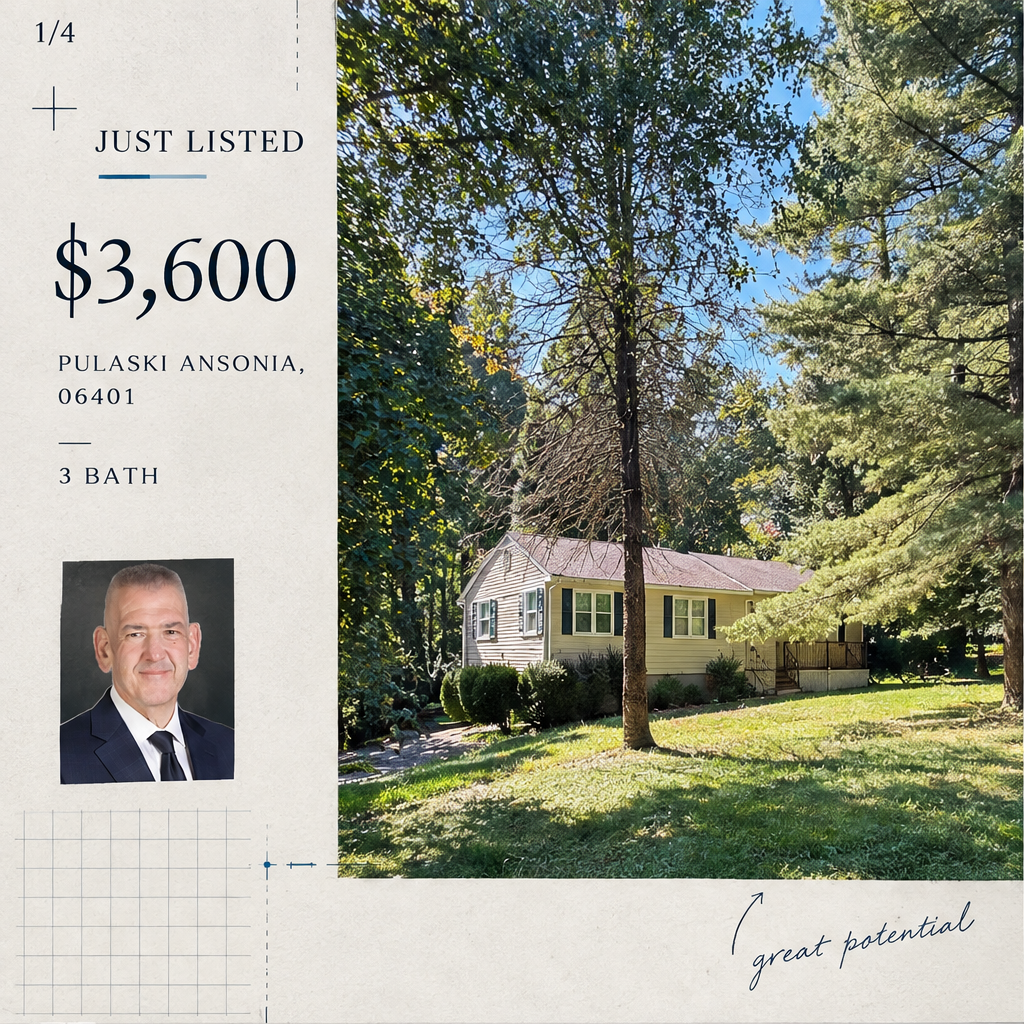
In recent months, we’ve seen seller concessions reach a new high across the U.S.—with about 45% of home sales in the rolling three-month period ending mid-Q3 including some kind of concession. That’s a noticeable increase from the 43% we saw a year ago, and it’s a clear sign that buyers have gained a bit more negotiating power as inventory rises and competition eases up. Concessions aren’t just about knocking down the asking price; they often include help with repairs, closing cost credits, or mortgage-rate buydowns, giving buyers a few extra paths to make a home purchase more manageable. About 16% of homes nationally paired a price reduction with a concession in mid-Q3, making it even easier for buyers to manage entry costs. In my work here in Cheshire, I see how every deal is unique—sometimes, it’s these creative solutions that make all the difference for buyers and sellers alike. Real estate is always evolving, and it’s my job to help you navigate these shifts with clarity and confidence.
Category: Latest Posts
-
The Housing Market Is Getting More Negotiable | fyp
In Cheshire and beyond, we're starting to see a shift: more homes are hitting the market, giving buyers a welcome chance to compare options instead of rushing into a quick decision. If you've been watching certain properties linger on the market or notice initial asking prices adjusting downward, that's the current landscape—buyers are gaining more leverage, especially when a home has been listed for a while or started above what today's buyers are prepared to pay.
For sellers, it means a bit more competition. Price, terms, and even offering repairs or concessions are becoming key tools to attract serious interest. As someone who thrives on straightforward advice, here's what I'm seeing: buyers should take the time to weigh their options and negotiate, while sellers need to be realistic about pricing and flexible with terms to stand out as the market evolves. Real estate decisions are always personal—and the right strategy depends on your goals. Let’s navigate these changes together.
-
How Real Estate Agents Can Create Better Daily Routines
In real estate, our days can be unpredictable—but developing a solid daily routine can make a real difference. By carving out time for lead generation, handling administrative details, showing properties, and prioritizing professional development, we not only stay ahead of the curve but also maintain a healthier work-life balance. Personally, I’ve found that setting aside moments for daily learning and networking helps me better guide my clients through each stage, whether they’re buying their first home or investing in something new. A thoughtful routine isn’t about rigid schedules—it’s about making space for what matters most, both in business and in life.
Continue to full article -
Look Beyond a Staged Property | fyp
Prospective buyers were urged to look beyond a staged home's visual appeal during open houses and focus on details that support more informed decisions.
An agent said buyers should closely evaluate the home's overall condition, not just presentation, when comparing properties and deciding whether a showing reflects lasting value.
Neighborhood review matters too, with guidance encouraging buyers to assess the surrounding area rather than judging a property only by what is inside.
Separate neighborhood tips highlighted signs of promising markets, including new development and local business expansion, as buyers search for areas showing momentum.
These themes showed an ongoing advisory role in the home buying process, centered on helping shoppers make more informed choices as they evaluate homes. -
The Role of Supply and Demand in Real Estate Pricing
The housing market is influenced by supply and demand, where high demand and low supply drive prices up, often causing bidding wars. Low interest rates increase demand by making mortgages more affordable, while supply fluctuates due to factors like new construction, population changes, and disasters. The 2000s housing crash resulted from high demand fueled by low rates and relaxed lending, followed by oversupply and falling prices. Understanding these dynamics helps predict market trends.
Continue to full article -
What Smaller U.S. Homes Could Mean for Buyers | fyp
Over the prior decade, avg. new US single-family homes sold shrank from 2.7K sq-ft to 2.4K sq-ft, while price per sq-ft climbed ~72%.
In 2025, 1 in 4 new single-family homes sold measured under 1.8K sq-ft, up from ~1 in 6 a decade earlier nationwide.
Meanwhile, the share of new US homes at 3K sq-ft or larger slipped from ~1 in 3 to 1 in 5 over the decade.
Builders increasingly used smaller designs to offset rising land, labor, and material costs, helping keep prices within reach amid mortgage rates near ~6% to ~7%.
For budget-focused and first-time buyers, smaller homes could ease down payments and monthly costs, though the higher price per sq-ft showed housing stayed expensive. -
Home Sale Exclusion Can Shield $250,000 From Tax | fyp
US sellers qualify without realizing it: live in a primary residence for 2 of the past 5 yr, exclude up to $250K, $500K jointly.
Two tests matter: own your home for 2 of 5 yr and live there 2 of 5 yr; those periods need not be consecutive or overlap.
For full $500K, both spouses need residency, though only 1 needs ownership; use the exclusion every 2 yr. Second homes and rentals don't qualify.
Taxable gain starts with sale price, then selling costs and cost basis. Capital improvements raise basis; routine repairs and repainting do not count.
Before listing, gather closing papers and receipts. Waiting a few months for the 2-yr mark can save substantial tax; some early sales still qualify partially. -
2027 Brings Promising Homebuying Opportunities Ahead
Thinking about waiting for the market to become more affordable before making your move? Here’s a look at what’s ahead: Experts expect mortgage rates to hover around 7% in 2027, and home prices are projected to rise by 2.2%. This increase is being driven by inflation and persistently high building costs, which means affordability may remain a challenge—even though prices could dip a bit in 2026. In the Cheshire market, I’ve seen how these trends impact first-time buyers, seasoned investors, and luxury clients alike. Navigating these shifts takes a clear-eyed approach and a steady hand—something I bring to every transaction, whether you’re buying your first home or your next investment.
Continue to full article -
Short Sales Can Leave Mortgage Debt | fyp
A short sale happens when a home sells for less than the mortgage balance, with proceeds going to the lender, usually to avoid foreclosure.
Lender approval is required before any short sale, and the lender may forgive the remaining debt or seek repayment of some deficiency.
The process can be paperwork-heavy and slow, often taking months, with homeowners asked to document new financial hardship and submit a buyer-backed proposal.
Before pursuing a short sale, owners can ask lenders about revised payment plans, loan modification, or help tied to private mortgage insurance.
For buyers, short sales may offer discounted pricing, but homes are often sold as-is, lender approval can delay closing, and careful inspection matters.
Compared with foreclosure, a short sale usually damages credit less, and some homeowners may qualify to buy another home sooner after closing.